
Across the retail landscape, businesses routinely retire premium digital signage prematurely, assuming that fading brightness or minor stuttering in playback means it is time for a costly hardware upgrade. In reality, most commercial displays are simply suffering from system calibration drift, unoptimized media players, or poor content layouts.
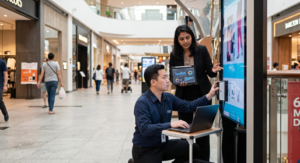
Before committing capital to full hardware replacement, networks should audit three hidden bottlenecks:
- Color Profile Drift: Display panels naturally shift over time. Regular hardware-level calibration restores brand-accurate color reproduction without requiring replacement of the modules themselves.
- Media Player Overload: Choppy transitions or low resolution are often caused by unoptimized media player settings or overly heavy content files, not a faulty screen.
- Environmental Scaling: Signage facing ambient sunlight needs automated, dynamic brightness scheduling rather than maxed-out static settings, which drastically burn out panel lifespans.
Rather than rushing into heavy capital expenditure, pairing professional system upkeep with advanced media automation rescues your current investment. This ensures pristine visual performance and flawless ad loops across both new and legacy screens, unlocking high-margin retail media revenue at a fraction of the cost.
Comment “PLAYBOOK,” and we’ll send you our Retail Media Playbook.
#RetailMedia #DOOH #DigitalSignage #MalaysiaRetail #RetailTechnology #InStoreMedia #RetailInnovation #RetailTransformation